Why DTF Transfers Are Changing Custom Apparel for Small Businesses
Walk into any screen printing shop in Southern California and you will see the same familiar setup: screens stacked on racks, emulsion tanks, and the smell of plastisol ink hanging in the air. Screen printing has been the workhorse of custom apparel for decades, and for good reason. It delivers vibrant colors, holds up through hundreds of washes, and once the screens are burned, the per-piece cost drops fast. But there is a catch. Screen printing demands volume. You need a minimum run, usually a dozen or more shirts per design, just to make the setup worth it. That math does not work for every customer.
Enter the world of direct-to-film printing. DTF transfers have been gaining traction in the industry because they solve the volume problem while still giving you the kind of color saturation and durability that screen printing is known for. I have spent years working in both screen printing and digital decoration, and I have watched DTF go from a niche curiosity to a reliable tool that shops of all sizes now use. It is not a replacement for screen printing, but it fills gaps that screen printing has never been able to cover well.
What DTF Actually Does
A DTF transfer is produced on a special film that is printed with a white ink base and then covered with a hot-melt adhesive powder. Once cured, the transfer can be pressed onto almost any fabric using a heat press. The process is fast, the colors are vivid even on dark garments, and the print feels soft to the touch because the ink sits on the surface rather than soaking in. That last point matters more than most people realize. Customers want a design that looks like it belongs on the shirt, not like a stiff patch glued on top.
Compared to direct-to-garment printing, which sprays ink directly onto the fabric, DTF transfers give you more flexibility in fabric types. You can print on nylon jackets, polyester blends, cotton, even leather, and the transfer will bond properly as long as the surface can take heat. DTG works best on 100 percent cotton and can struggle with dark polyester or performance fabrics. DTF handles those cases without extra pretreatment or special handling.
The Real Cost Difference
When people ask me whether DTF transfers are cheaper than screen printing, I tell them it depends on the quantity. At low volumes, DTF wins by a long shot. A single shirt with a full-color design can be done for a few dollars in material and labor. Screen printing that same single shirt would require burning a screen, setting up the press, and cleaning up afterward, all for one impression. That is not economical for anyone.
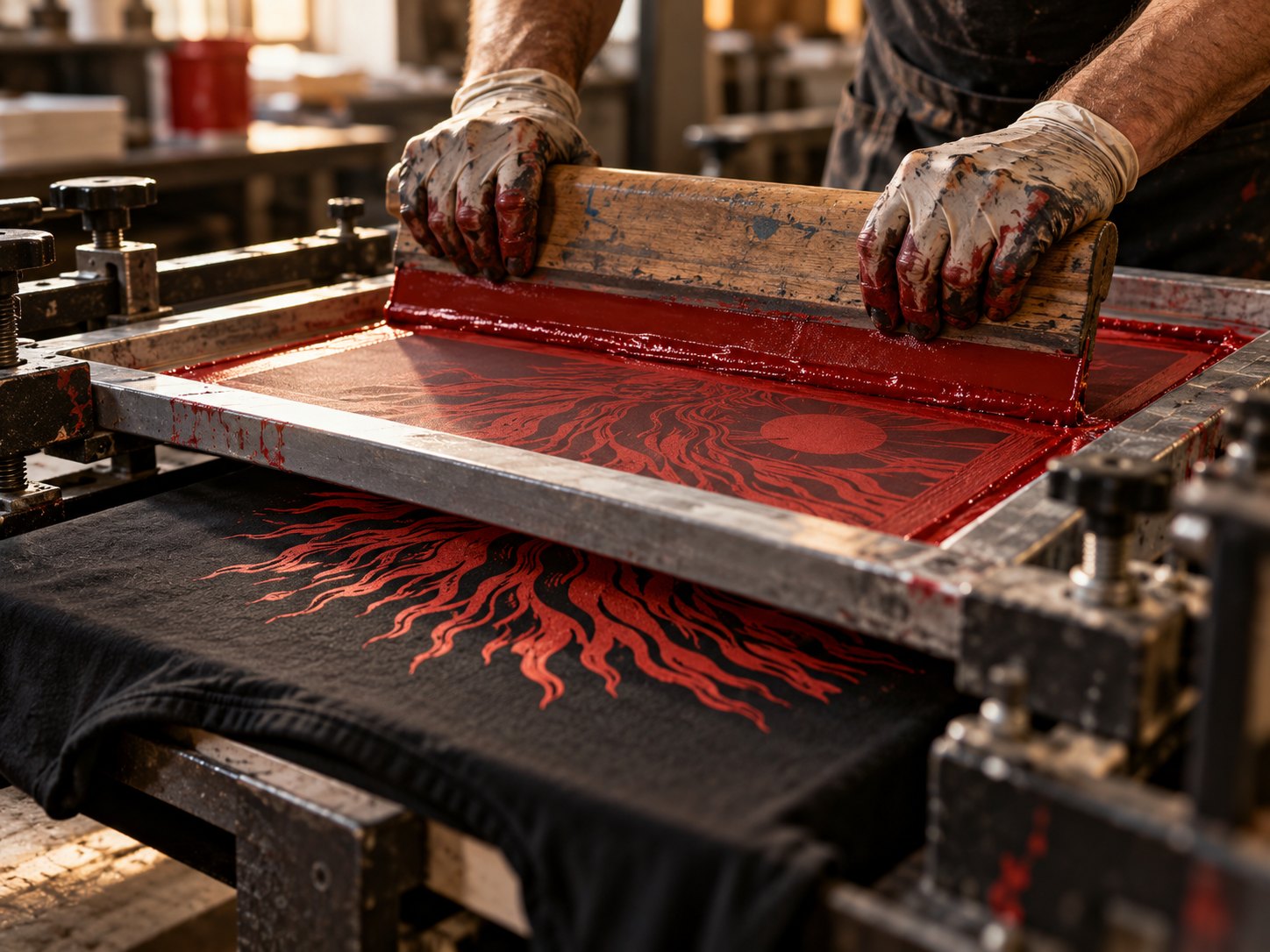
As the order size grows, screen printing starts to pull ahead. At around two dozen shirts, the screen printing cost per shirt equals DTF. At fifty or more, screen printing is significantly cheaper because the setup cost is spread across many units. The smartest shops use both methods. They run screen printing for high-volume runs and use DTF transfers for the small orders, samples, and short-run jobs that would otherwise eat up press time.
Practical Trade-offs
There are a few things to watch out for with DTF. The transfers can be slightly thicker than a screen print because of the adhesive layer. On soft, lightweight garments, the feel might be noticeable. I recommend testing the transfer on the actual fabric before committing to a large run. Also, because the transfer is applied with heat and pressure, the garment needs to be able to withstand 300 degrees Fahrenheit for about fifteen seconds. Most cotton and polyester blends handle that fine, but some delicate fabrics or certain performance coatings can scorch or warp.
Another consideration is the white ink base. DTF printers use a white ink layer to make colors pop on dark fabrics. That white layer adds opacity, but it also adds thickness. When I run a DTF job on a black shirt, I always check the edges of the design for any lift or peeling after the first wash. Quality DTF film and proper curing usually prevent that, but it is worth verifying with every new supplier.
Where DTF Fits in a Custom Apparel Business
For screen printers who are used to thinking in dozens and hundreds, DTF opens up a market they might have turned away before. Local sports teams that need one jersey with a number and a name. Corporate events where the client wants ten polos with a logo. Small businesses that order five hats at a time. Those orders used to be a hassle. Now they are profitable, and they often lead to larger orders later.
The turnaround time is also faster. A screen printing job takes a day or two just for screen preparation. With DTF transfers, the design is printed onto film and ready to press within a few hours. That speed makes a real difference when a customer calls on a Tuesday and needs shirts by Friday. You can produce the transfers in-house or order them from a dedicated DTF service and press them as soon as they arrive.
Connect with us on Instagram.
What to Look for in a DTF Supplier
If you are buying pre-made transfers instead of printing them yourself, quality varies widely. Here are a few things I have learned to check:
- Ask about the adhesive powder. Some suppliers use a standard powder that works fine on cotton but peels on nylon. A good supplier will tell you exactly what powder they use and recommend a pressing temperature.
- Check the white ink opacity. Hold the transfer up to a light. If you can see through the white layer easily, it will not cover dark fabrics well.
- Request a test strip before ordering a full run. Press it onto the fabric you plan to use, wash it, and check for cracking or peeling.
- Look at the film backing. Some films are too stiff and make it hard to weed small details. A flexible film saves time during application.
These checks might sound tedious, but they save you from wasting materials and disappointing a customer. I have seen shops lose money on a job because the transfer failed after the first wash and they had to redo the entire order. A little due diligence goes a long way.
Common Misconceptions
One misconception I hear often is that DTF transfers are only for small runs. That is not true. I have seen shops use DTF for runs of a hundred shirts when the design had many colors and the customer wanted a soft hand feel. The per-piece cost was higher than screen printing, but the customer was willing to pay for the quality and the quick turnaround. The key is knowing when to use each method, not treating one as universally better.
Another misconception is that DTF is difficult to learn. In reality, the process is simpler than screen printing. There is no emulsion, no exposure unit, no reclaiming screens. You print the film, apply powder, cure it, and press it. The learning curve is mainly about dialing in the temperature and pressure for different fabrics. Once you have that figured out, it is repeatable and consistent.
Final Thoughts
I have seen shops in Garden Grove and across Orange County adopt DTF transfers over the past few years, and the ones that do it well treat it as a complement to their existing capabilities rather than a replacement. The best approach is to assess each order on its own terms. How many pieces? What fabric? What is the timeline? What is the budget? With DTF in your toolkit, you can say yes to more jobs without overcomplicating your workflow.
If you are in the area and looking for custom apparel services, DSP Printing at 11611 Salinaz Dr Ste O, Garden Grove, CA 92843, USA, offers screen printing and embroidery for businesses and organizations, and can be reached at +1 714-951-4919.